
Outdoor Shading for Tropical Climate: The Complete Guide for Malaysia & Southeast Asia
Published September 4, 2026 · By AluShed Team · 9 min read
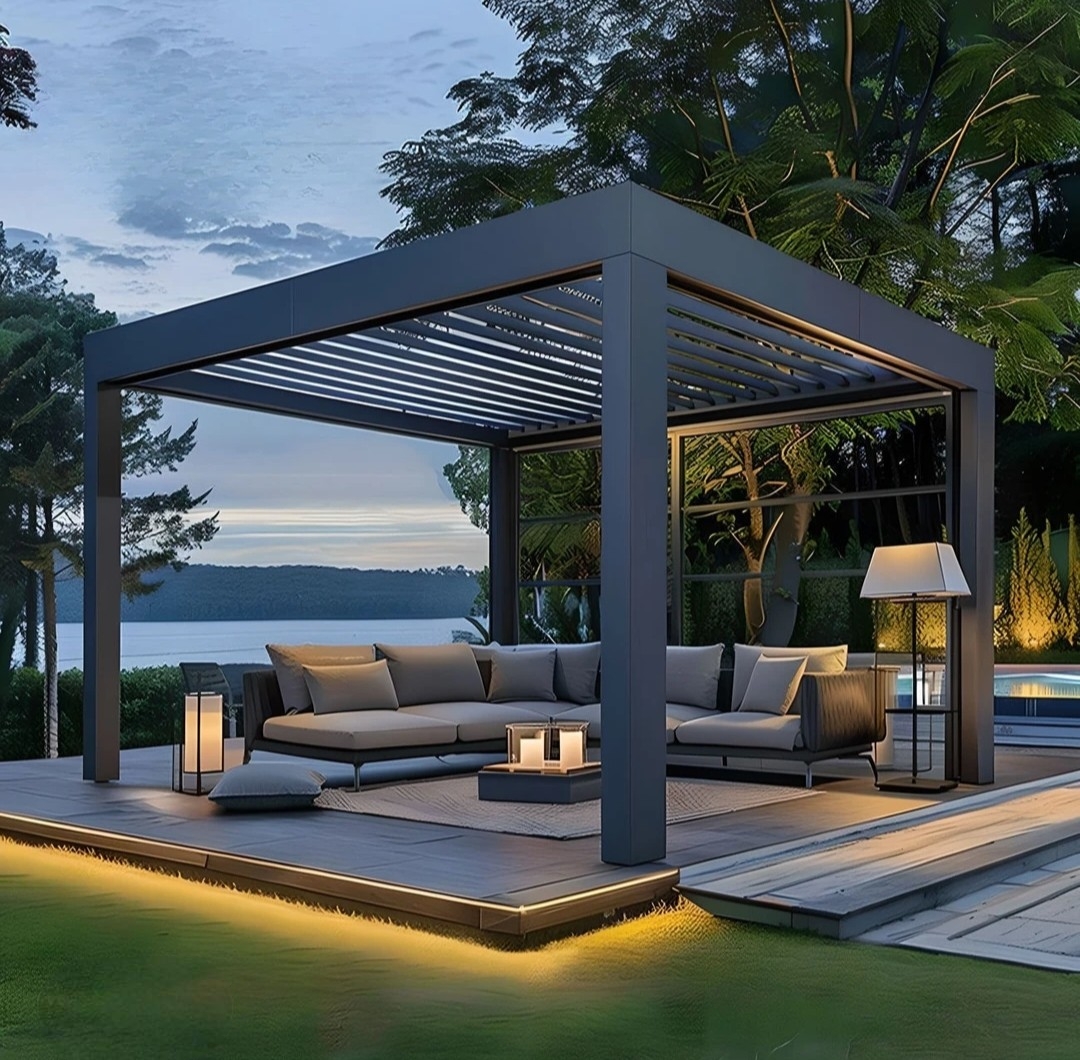
For tropical climates (Malaysia, Singapore, Thailand, Indonesia), the best outdoor shading system is a motorized louvered aluminum pergola + windproof zip screens. Choose 6063-T5 aluminum with Qualicoat Class 2 powder coating (salt-spray resistant), 5% openness dark gray mesh fabric (blocks 90% UV, keeps airflow), and rain sensors for automatic closure during monsoons. Budget /m虏 factory direct. Avoid wood (rots in 2鈥? years) and standard roller blinds (blow out in gusts). Full enclosure enables year-round use despite 30掳C+ heat, 80%+ humidity, and sudden monsoon rain.
If you live in Malaysia, Singapore, Thailand, Indonesia, or any tropical country, you already know the challenge: intense sun, sudden monsoon rains, high humidity, and occasional strong winds — all in a single afternoon. A shading system that works in Europe or North America may fail spectacularly in the tropics.
At AluShed, we supply outdoor aluminum shading systems to distributors and contractors across Southeast Asia. In this guide, we share what actually works in tropical climates — and what to avoid. We'll compare motorized louvered pergolas, windproof zip screens, PVC folding awnings, and full-box retractable canopies, with specific recommendations for Malaysian and SEA conditions.
📑 Table of Contents
- 5 Challenges of Tropical Outdoor Spaces
- System Comparison: Which Handles the Tropics Best?
- Motorized Louvered Pergola: The All-Rounder
- Windproof Zip Screens: Essential for Sides
- PVC Folding Awning: Large-Span Budget Option
- Recommended Configurations by Use Case
- Material & Coating Choices for Tropical Durability
- Frequently Asked Questions
1. 5 Challenges of Tropical Outdoor Spaces
Before choosing a system, understand what you're up against. Tropical climates present a unique combination of stressors:
☀️ Intense UV Radiation
Countries near the equator receive UV Index 10–12+ daily — the "extreme" category. Ordinary fabrics fade, become brittle, and tear within 2–3 years. Low-quality powder coating on metal chalks and discolors. Only marine-grade or UV-stabilized materials survive long-term.
🌧️ Monsoon Rain & High Humidity
Malaysia's monsoon season (November–March on the east coast, May–September on the west) brings 2,000–3,000mm of annual rainfall. Sudden downpours with wind-driven rain test every seal and joint. High humidity (70–90% year-round) accelerates corrosion of unprotected metal.
💨 Sudden Wind Gusts
Tropical thunderstorms bring wind gusts of 60–100 km/h with little warning. Systems that must be retracted in wind (like ordinary awnings) are impractical — you can't be there every time a storm hits. Wind-resistant designs are essential.
🦟 Mosquitoes & Insects
Dengue, Zika, and malaria are real concerns in the tropics. An outdoor space that can't keep mosquitoes out is only half-usable, especially at dusk and dawn.
🌡️ Heat & Glare
Average temperatures of 28–32°C with 80% humidity make shade essential — but not just any shade. The system must block radiant heat while allowing airflow, otherwise the space becomes a sauna.
2. System Comparison: Which Handles the Tropics Best?
| Factor | Louvered Pergola | Zip Screens | PVC Folding Awning | Full-Box Canopy |
|---|---|---|---|---|
| UV Block | ★★★★★ | ★★★★☆ | ★★★☆☆ | ★★★★★ |
| Rain Protection | ★★★★★ | ★★★☆☆ | ★★★★☆ | ★★★★★ |
| Wind Resistance | ★★★★★ | ★★★★☆ | ★★☆☆☆ | ★★★☆☆ |
| Airflow | ★★★★★ | ★★★★☆ | ★★★☆☆ | ★★☆☆☆ |
| Insect Block | ★☆☆☆☆ | ★★★★★ | ★☆☆☆☆ | ★☆☆☆☆ |
| Tropical Durability | ★★★★★ | ★★★★☆ | ★★★☆☆ | ★★★★☆ |
| Best For | Roof (all climates) | Sides (tropical essential) | Large budget areas | Wall-mounted shade |
The winning combination for tropical climates: A motorized louvered pergola for the roof + windproof zip screens for the sides. This combo addresses all five challenges: UV, rain, wind, insects, and heat. We'll explain why below.
3. Motorized Louvered Pergola: The All-Rounder
For tropical conditions, a motorized aluminum louvered pergola is the single best investment for your outdoor space. Here's why it outperforms alternatives:
Adjustable Shade = Comfort in All Conditions
Unlike fixed roofs or retractable awnings (which are either fully open or fully closed), louvered blades rotate 0–135°. At midday, close them for full shade and rain protection. In the morning or evening, angle them to let in gentle sunlight while blocking glare. This fine-tuned control is exactly what tropical weather demands — conditions change by the hour.
100% Waterproof When Closed
Overlapping aluminum blades with integrated gutters channel rainwater through the posts — no dripping, no pooling. This is critical during monsoon season. Unlike fabric roofs, aluminum doesn't sag or leak when water accumulates.
Stays Open in 100+ km/h Wind
AluShed AluS220 Heavy series is rated for Grade 10 wind (89–102 km/h). When a sudden tropical storm hits, simply open the louvers fully (0°) to let wind pass through — the structure remains solid. No need to rush out and retract anything.
Aluminum = Termite-Proof & Rust-Resistant
Wood pergolas in the tropics face termites, rot, and fungal growth within 3–5 years. Steel rusts in high humidity. 6063-T5 aluminum with marine-grade powder coating lasts 15–25 years with minimal care — the only sensible choice for tropical outdoor structures.
4. Windproof Zip Screens: The Tropical Essential
A pergola gives you a roof — but in the tropics, the sides are equally important. Windproof zipper roller blinds (zip screens) solve three tropical problems at once:
- Mosquito protection: 5% PVC mesh keeps out mosquitoes and flies while maintaining airflow. This alone transforms a Malaysian patio from "occasionally usable" to "usable every evening."
- Wind-driven rain block: During monsoon downpours, rain blows sideways under any roof. Zip screens on the windward side stop 80–90% of rain blow-in.
- Glare & heat reduction: Dark mesh fabric blocks 90–95% of UV and reduces radiant heat from low-angle morning/evening sun — when the roof alone doesn't help.
For tropical installations, we recommend 5% openness PVC mesh in dark gray or black. The dark color provides excellent outward visibility (you can see out, others can't see in during the day), and the 5% openness allows crucial airflow — preventing the enclosed space from becoming a heat trap.
Smart upgrade: Add a wind sensor (+$80–$200) that automatically retracts the screens if wind exceeds your set threshold. This protects your investment when you're away during a sudden storm.
5. PVC Folding Awning: Large-Span Budget Option
For very large areas (10m+ wide) where a pergola would be cost-prohibitive, a PVC folding retractable awning (also called a folding roof or sliding canopy) is a viable budget alternative — but with caveats for tropical use:
Advantages in the Tropics
- Spans up to 15m wide — ideal for large restaurant terraces, event spaces, and pool covers
- Fully retracts to open-sky when weather is good
- More affordable than a multi-bay pergola for very large areas
- PVC fabric is waterproof and UV-resistant (quality grades)
Tropical Limitations
- Must retract in wind above 50–60 km/h — impractical during sudden tropical storms. A wind sensor is mandatory.
- PVC fabric lifespan: 8–12 years, then needs replacement (aluminum pergola blades last 20+ years)
- Binary operation — fully open or fully closed, no intermediate shade adjustment
- Water pooling on the fabric if not properly tensioned (requires regular maintenance)
Bottom line: Choose PVC folding awnings only for large commercial spaces where cost per square meter is the primary driver, and where staff can retract them when storms approach. For residential and small-to-medium commercial use, a louvered pergola is the better tropical investment.
6. Recommended Configurations by Use Case
| Use Case | Recommended System | Why |
|---|---|---|
| 🏠 Residential Patio (KL, Penang, JB) | AluS180 Pergola + 2–3 zip screens (5% dark mesh) | Affordable, adjustable shade, mosquito-free evenings, handles moderate monsoon wind |
| 🏖️ Coastal Villa (Langkawi, Penang, Desaru) | AluS220 Pergola (marine coating) + zip screens all sides | Salt air resistance, Grade 10 wind rating, full enclosure for monsoon |
| 🍽️ Restaurant / Cafe Terrace | AluS220 Pergola + zip screens + LED lighting | Maximizes usable seating year-round, insect-free dining, premium look |
| 🏨 Hotel Pool / Event Space (10m+) | PVC Folding Awning + wind sensor (or multi-bay pergola if budget allows) | Large span coverage, retracts for open-sky events, cost-effective per m² |
| 🏢 Commercial Building Facade | Full-Box Retractable Awning (wall-mounted) | Protects windows/entrances from tropical sun and rain, retracts neatly |
| 🌿 Villa Garden / Landscape Project | AluS180 Pergola + zip screens + optional LED + heater | Aesthetic focal point, creates outdoor "room", flexible for all weather |
7. Material & Coating Choices for Tropical Durability
The biggest mistake buyers make in the tropics is choosing the cheapest material option. Here's what actually lasts:
Aluminum Frame: 6063-T5 is Non-Negotiable
Insist on 6063-T5 aluminum alloy with a minimum wall thickness of 1.8mm (AluS180) or 2.2mm (AluS220). Lower-grade aluminum (6061) or thinner profiles will flex in tropical heat and may not survive strong monsoon winds.
Powder Coating: Marine-Grade for Coastal
Standard polyester powder coating lasts 5–8 years in tropical UV before chalking. AkzoNobel or Interpon marine-grade fluoropolymer coating lasts 10–15+ years and resists salt corrosion. For any property within 10km of the ocean, this upgrade (typically +$300/unit) pays for itself.
Fabric: PVC-Coated Polyester Mesh
For zip screens, choose PVC-coated polyester mesh (not acrylic) for tropical use. PVC coating resists mold, mildew, and UV degradation better. Look for fabrics with a 10-year UV warranty from reputable manufacturers (e.g., Ferrari, Sauleda, or equivalent Chinese premium grades).
Fasteners: 304 or 316 Stainless Steel
All screws, bolts, and brackets must be 304 stainless steel minimum (316 for coastal). Galvanized steel or ordinary iron fasteners will rust within 1–2 years in tropical humidity, staining the aluminum and creating structural weaknesses.
- Wood or bamboo structures — termites and rot in 2–3 years
- Steel frames without hot-dip galvanizing + powder coating — rust in 1–2 years
- Ordinary (non-zipper) roller blinds — blow out in first strong wind
- Cheap acrylic fabric — fades and tears in 2–3 tropical years
- No drainage gutter system — water drips everywhere in monsoon
8. Frequently Asked Questions
Will an aluminum pergola get too hot under the tropical sun?
Aluminum does conduct heat, but a louvered pergola's design minimizes heat transfer. When closed, the overlapping blades create an insulating air gap. When partially open, hot air escapes through the gaps. For maximum comfort, choose a light-colored finish (white, light gray) which reflects more heat than dark colors. Adding ceiling fans under the pergola further improves comfort.
How do I protect my outdoor furniture during monsoon season?
A louvered pergola with closed blades provides full overhead rain protection. Add zip screens on the sides to block wind-driven rain. For furniture itself, choose outdoor-rated materials (aluminum, teak, synthetic rattan, water-resistant cushions). Store cushions indoors or in a waterproof box during extended monsoon periods.
Can I install a pergola myself in Malaysia, or do I need a professional?
AluShed pergolas are designed for semi-DIY installation with clear manuals and pre-drilled components. However, for tropical safety (wind load, proper anchoring), we recommend professional installation — especially for units over 4m wide or in coastal high-wind areas. Many Malaysian contractors are familiar with aluminum pergola installation and charge 15–25% of product cost.
Do I need a building permit for a pergola in Malaysia?
Permit requirements vary by state and local council (MPKJ, MBSA, DBKL, etc.). Generally, freestanding pergolas under a certain size (often 10–15m²) and height (often 3m) may not require a permit — but always check with your local council. Attached pergolas and structures in landed properties may need approval. AluShed can provide engineering drawings for permit applications.
How long does shipping take from China to Malaysia?
Sea freight from Foshan to Port Klang takes approximately 7–10 days sailing, plus 3–5 days customs clearance and last-mile delivery. Total door-to-door: 2–3 weeks. Air freight is 3–5 days but significantly more expensive. AluShed ships LCL (less than container load) for small orders and FCL (full container) for distributors and large projects.
Building in Malaysia or Southeast Asia?
AluShed supplies factory-direct aluminum shading systems optimized for tropical conditions. Marine-grade coating, stainless fasteners, Grade 10 wind rating — built for monsoons. OEM/ODM for distributors, free CAD drawings for projects.